HP Launches webOS-Based TouchPad
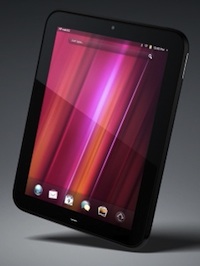
The HP TouchPad is the first slate built on webOS. It's expected to ship with webOS 3.0. |
HP has debuted three new webOS-based mobile devices--a slate called the HP TouchPad and two smart phones, including the smallest webOS-based phone to date.
webOS is the mobile operating system HP acquired when it purchased mobile device manufacturer Palm for about $1.2 billion last July. The move was designed to enable HP to "participate more aggressively in the highly profitable, $100 billion smartphone and connected mobile device markets," as the company put it in its public announcement last summer.
The HP TouchPad represents the first webOS-powered slate. Built around a dual-core, 1.2 GHz Qualcomm Snapdragon APQ8060 processor, the HP TouchPad sports a multitouch-capable 9.7-inch capacitive touchscreen with an XGA (1,024 x 768) resolution and 18-bit color. Other features include:
- 1.3 megapixel, front-facing camera;
- 802.11 b/g/n wireless networking with support for a variety of authentication methods, including WPA/WPA 2, WEP, and 802.1X;
- Bluetooth 2.1+EDR;
- Integrated stereo speakers and stereo headphone/mic minijack;
- USB 2.0 connector for data and charge;
- 16 GB or 32 GB internal storage; and
- GPS (with 3G models).
HP said it expects the 1.6-pound TouchPad to be available this summer.
The company also launched two new webOS-based smart phones, the Pre3 and Veer. The Veer, the smallest webOS phone, is roughly credit card-sized in width and height (2.5" x 3.31"), though slightly thicker than the TouchPad at 0.59 inches.
It features:
- A 2.6-inch touchscreen; (320 x 400 with 18-bit color);
- A pull-out physical keyboard;
- 5 megapixel camera;
- 802.11 b/g/n wireless;
- Bluetooth 2.1+EDR;
- GPS; and
- 8 GB internal memory.
The Veer is expected to be available this spring.
Built around a 1.4 GHz Qualcomm MSM 8x55 processor, the Pre3 features a 24-bit, 3.58-inch multitouch display with a WVGA (480 x 800) resolution. It also offers:
- A slide-out physical keyboard;
- 5 megapixel camera with flash and up to 720p video recording;
- 802.11 b/g/n wireless;
- Bluetooth 2.1+EDR;
- GPS;
- 512 MB RAM; and
- 8 GB or 16 GB internal memory.
The Pre3 is expected to ship this summer.
Further information about all of the new systems can be found here.