Texas A&M Mapping App Being Commercialized
- By Dian Schaffhauser
- 07/17/15
Shortly, a new multi-touch, multi-map application created at Texas A&M
University-Corpus Christi will be available commercially. SituMap was created by Richard Smith, an assistant professor of geographic
information science (GIS) and geospatial surveying engineering, who collaborated with students and campus police in development of the
software.
The program's initial market is for use by first responders going into emergency situations; but eventually it could find a home in other
types of organizations where mapping on the fly by groups of people plays a role, such as municipal planning offices and oil and gas
companies.
SituMap allows users to map out crisis areas and explore and draw on them with a finger. The table-sized display, which acts like Google
Maps in large format, can be zoomed, rotated and sketched on by multiple people. Erasing is done by wiping drawn lines with a hand. Text can be
hand-written or typed in with an on-screen keyboard.
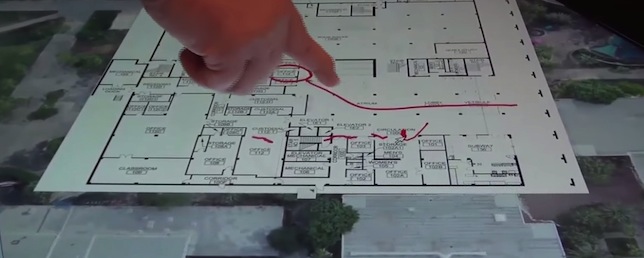
Public safety personnel can search for locations, measure distances and draw routes going from outside of buildings to the inside, exposing
floor plans. Maps can be "spawned" on top of the main map to allow users to work independently on the same display. An emergency location can
be "pinned" on the map and communicated to groups of recipients, feeding them directions involving multiple locations. The program works on
smartphones.
The application can also display real-time information on traffic congestion and weather and work with varied sources of information,
including drone imagery, floorplans and other Web maps.
"The goal is to make the world a safer place," Smith said in a prepared statement.
A startup, CartoFusion Technologies, has been set up to commercialize the product.
Investors in the new company include the university itself as well as the university's
Texas Engineering Extension and its technology commercialization unit. Smith is a
partner and founding team member in the firm. Broad launch is expected to take place in about six months.
About the Author
Dian Schaffhauser is a former senior contributing editor for 1105 Media's education publications THE Journal, Campus Technology and Spaces4Learning.