Service Launched to Help Universities Comply With ADA Web Site Regulations
A division of Perkins School for the Blind now offers a consulting package that will assist colleges and universities comply with Americans With Disabilities Act guidelines that require their websites be accessible to people with disabilities.
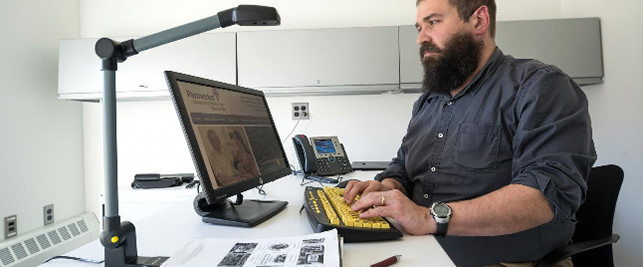
A study found 90 percent of the highest-ranked higher education institutions in the U.S. did not have Web sites that comply with ADA standards.
Acknowledging that a wide variety of higher education institutions have run into legal problems because access to their Web sites does not conform to the most recent version of the Americans With Disabilities Act, Perkins School for the Blind has launched a consulting service that will help colleges and universities meet requirements and enhance access to their digital resources.
A division of the Perkins School in Watertown, MA, Perkins Solutions conducted a survey of the 20 colleges and universities ranked highest by U.S. News & World Report. The study found that more than 90 percent of the schools — meaning all but one or two — failed to meet at least some of the guidelines the federal government has set to make Web sites accessible to disabled users.
As a consequence, Perkins has introduced its Perkins Access set of services to help schools address the problems of accessibility. Harvard University and the University of Notre Dame have already taken advantage of the service.
A team of accessibility technology experts will review a university's digital assets across the enterprise and provide an access report that outlines the accessibility issues discovered. The review typically includes Web content, mobile applications, Microsoft Office files, PDFs and hardware.
The team can then develop remediation plans to ensure that those assets can be fully used by individuals with disabilities. Remediation efforts can include coding, the types of files used, and the captioning and audio description of rich media. If required, the team can also offer ongoing monitoring and a staff training program.
"By making Web sites accessible," said Perkins Solutions Digital Accessibility Director Cris Broyles, "we not only create a more accessible world for individuals with disabilities, we make organizations more attractive to a broader audience."
About the Author
Michael Hart is a Los Angeles-based freelance writer and the former executive editor of THE Journal.