ASU Study: VR Biology Labs Enhance Student Performance and Engagement
- By Kate Lucariello
- 10/26/22
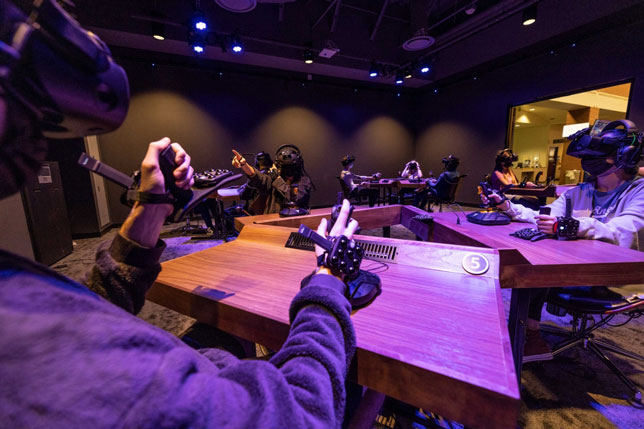
Students participate in the Dreamscape Learn VR lab. (Image courtesy of Dreamscape Learn)
A Spring 2022 study following two VR biology labs at Arizona State University showed elevated student performance and engagement in several areas, compared to results in labs without the VR component.
Two years ago, ASU partnered with Dreamscape Immersive, founded by former Dreamworks Motion Picture head Walter Parkes, for a collaborative venture called Dreamscape Learn (DSL), devoted to merging "the most advanced experiential pedagogy with the entertainment industry's best cinematic storytelling to deliver unique virtual reality and 2D labs and full course experiences which are provably efficacious, readily scalable and emotionally engaging," according to the initiative's mission statement. DSL created a VR lab to accompany two introductory biology courses at ASU, one for majors and one for non-majors, during the Spring 2022 semester. Of the 660 students enrolled in the courses, 486 agreed to participate in a study of their experiences and their grades. Of participants, half were assigned to a VR lab and half to a conventional lab, selected under balanced demographic and academic factors. Those in the VR lab wore headsets and hand controllers and created an avatar in the VR world with which to interact in a mission to solve biological problems in a storyline setting.
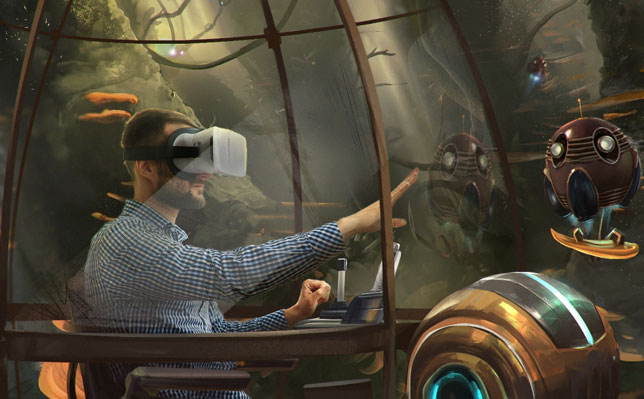
This rendering demonstrates what the VR lab experience looks like for the user. (Image courtesy of Dreamscape Learn)
Results showed that students in the DSL labs, including those who have historically struggled in past STEM programs, performed better on lab assignments and earned higher lab grades than those in non-DSL labs. The course withdrawal rate was also lower for DSL lab students than those in non-DSL labs. Study authors drew three major conclusions based on the data: 1) Students in DSL labs engaged with each other more frequently, chatting about course and non-course content, and collaborated on assignments with each other more often than those in non-DSL labs; 2) Teaching assistants (TAs) engaged with students in the DSL labs more often than in non-DSL labs, answering questions and being more friendly; and 3) Students in DSL labs helped each other more than twice as often and discussed course content more often with their TAs compared to those in non-DSL labs.
The university is so encouraged by the results and the implications for learning that it is planning to offer Dreamscape Learn labs for all introductory biology classes by Spring 2023. Other developments, such as offering DSL in K–12 classrooms, and real-time DSL labs networked to each other anywhere in the world, are being planned. Visit this page to read more about ASU's Dreamscape Learn study. To read the full study report with data, go here.
About the Author
Kate Lucariello is a former newspaper editor, EAST Lab high school teacher and college English teacher.