The University System of Maryland has partnered with Labster to provide its virtual laboratory simulations across all USM institutions.
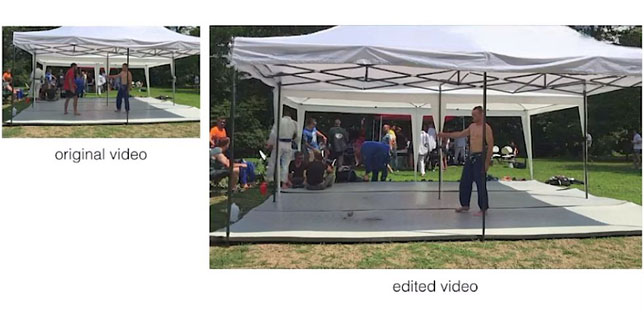
A team of researchers at Carnegie Mellon University has come up with a way to combine iPhone videos to create 4D visualizations. The results allow the viewer to see action from myriad angles, erase people from the scene to see what's behind them and remove objects that block lines of sight.
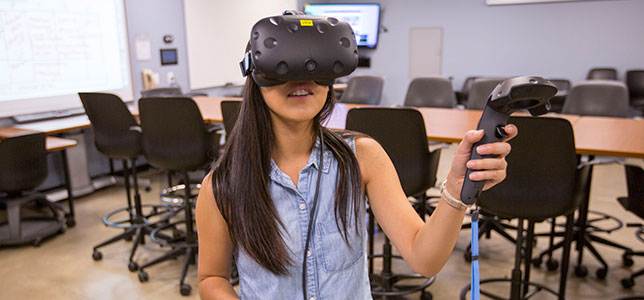
San Diego State University has created a center for teaching with virtual-, augmented- and mixed-reality tools that supports research in the cross-curriculum implementation of immersive pedagogies.
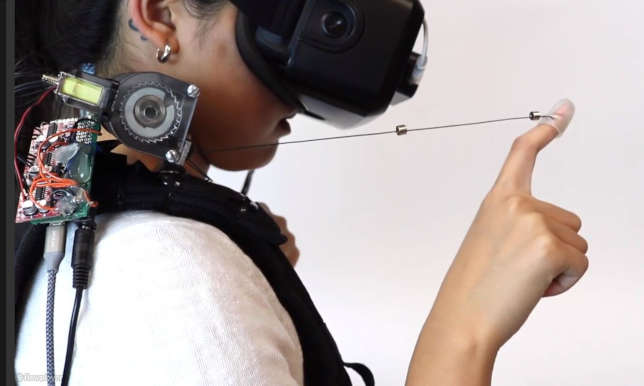
A new virtual reality device from a team of Carnegie Mellon University researchers allows users to "feel" virtual walls and objects.

With nearly all campuses transitioning to online learning during the COVID-19 outbreak, California's community colleges will let students continue their science lab-based education by giving them access to virtual laboratories.
Over the next two months, Kosovo's University for Business and Technology will be using the EON Reality platform to create 20,000 augmented/virtual reality lessons across a variety of subjects.
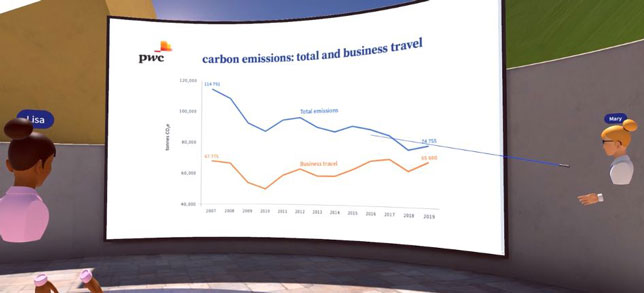
A Nordic company has introduced a virtual reality collaboration platform. Glue Collaboration's software by the same name facilitates virtual environments where remote participants can come together to learn, share, plan and create as if they were in the same physical space.
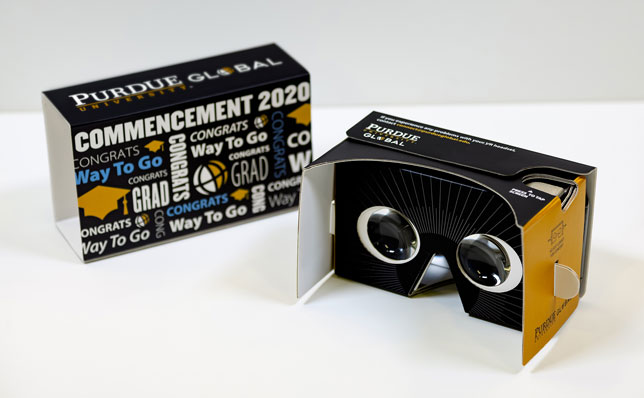
Graduates at Purdue University Global recently had the option to participate in their commencement ceremonies virtually, thanks to a pilot program using virtual reality to provide an immersive remote experience of the event.
The market for augmented reality technologies will soar to $100 billion by 2024, driven by advances in interaction between the user and AR devices, according to a new forecast by market research firm ABI.
Education is one of the categories that will help propel the growth of virtual reality over the next five years.