Seton Hall To Roll Out Lenovo Android Tablets
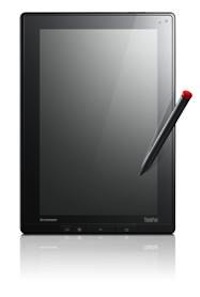
The Lenovo ThinkPad Tablet |
This fall Seton Hall University in New Jersey will become the first university to roll out the brand new Android-based Lenovo ThinkPad Tablet to faculty and students.
The ThinkPad Tablet, which began shipping Monday, is a 10.1-inch media tablet based on the Android 3.1 mobile operating system. It offers support for handwriting recognition with the ThinkPad Tablet Pen (standard on higher-end models, optional on the entry-level model). Hardware features include:
- A dual-core Nvidia Tegra 2 processor (ARM Cortex A9 CPU, 1 GHz per core with eight-core ultra-low-power GeForce GPU);
- 10.1-inch, 1,280 x 800 pixel multi-touch display with 178 degree viewing angle;
- WiFi, Bluetooth, and 3G connectivity;
- 1 GB memory and up to 64 GB internal storage;
- Three-in-one media card reader;
- Front- and rear-facing cameras (2 megapixels and 5 megapixels, respectively);
- Accelerometer, ambient light sensor, GPS, and gyroscope;
- 8.7 hour battery life using WiFi;
- An optional keyboard folio (a travel case that expands into a keyboard and stand); and
- A full-size USB port, along with a mini-USB port, mini HDMI port, and dock connector port.
The rollout at Seton Hall this fall is part of the university's broader program to support learning using mobile devices. The deployment will involve 350 faculty members and students in a few specific programs.
“As a long time partner with Lenovo as a ThinkPad University campus, we’re delighted to bring the ThinkPad Tablet to our students and faculty in the Sciences, Honors and the School of Business Leadership Program,” said Stephen G. Landry, chief information officer at Seton Hall, in a prepared statement. “This new technology represents the next evolution in Seton Hall University’s Mobile Computing Program to use technology effectively to support teaching, learning and institutional effectiveness while keeping pace with technology that appeals to our students.”
The ThinkPad Tablet is available now for $499 in a 16 GB configuration without a pen, $529 with. A 32 GB model with pen is available for $599, and a 64 GB version with pen is available for $699. Additional details can be found on Lenovo's site.