Acer Launches Bulbless Portable Projector
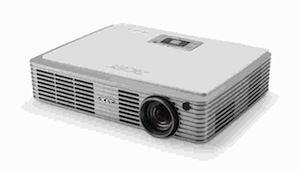
The Acer K330 uses a PhlatLight LED source to project images with a brightness of 500 Lumens and a contrast ratio of 4,000:1. |
Acer has unveiled an ultra portable DLP projector that displays HD and 3D images in small, low light venues without the aid of a bulb.
The new projector, dubbed the K330, combines a one-chip DLP design with a PhlatLight LED light source and a fixed lens to present video and images with a native resolution of 1,280 x 800, a brightness of 500 lumens, and a contrast ratio of 4,000:1.
To aid with portability, the projector is capable of displaying presentations and video directly from a USB dongle or SD card.
Additional features include:
- Digital vertical keystone correction of ±40 degrees;
- A maximum image size of 100 inches (diagonal);
- Color correction;
- Economy mode;
- 1.7:1 digital zoom;
- High altitude mode;
- Automatic shutdown;
- Alarm;
- Instant on/off; and
- 20,000 hours of LED life.
The projector measures 1.8" (h) x 8.6" (w) x 6.6" (d) and weighs 2.73 pounds.
AV inputs include HDMI, analog RGB/component (mini D-sub 15-pin), component video, USB mini-B, composite video, and a stereo minijack. AV outputs and peripherals include a stereo minijack and USB.
The K330 ships for $419 and is covered by a one-year warranty.
Further information is available at support.acer.com.
| Editor's note: This article has been modified since its original publication to correct a factual detail: The suggested price of the K330 is $419, not the figure reported earlier today. [Last updated Nov. 29, 2011 at 3:56 p.m.] --David Nagel |
About the Author
Dan Thompson is a freelance writer based in Brea, CA. He can be reached here.