Online Trackers Help Promote Better Sleep in Indiana U Staff Study
- By Dian Schaffhauser
- 10/26/17
Last year, nearly 1,100 employees at Indiana University took part in a challenge intended to encourage better sleeping habits. The program was instigated after a survey taken the previous year showed that more than four in 10 employees lacked the sleep they needed to function well in their jobs or their personal lives. The "Sleep Great IU! Challenge," run by Healthy IU, the institution's employee wellness program, asked participants to record their sleeping habits for four weeks on personal online trackers. Afterwards, most participants reported increased energy levels and an increase in their ability to manage stress.
Now the program is being licensed by other schools as well as businesses to use with their staff members.
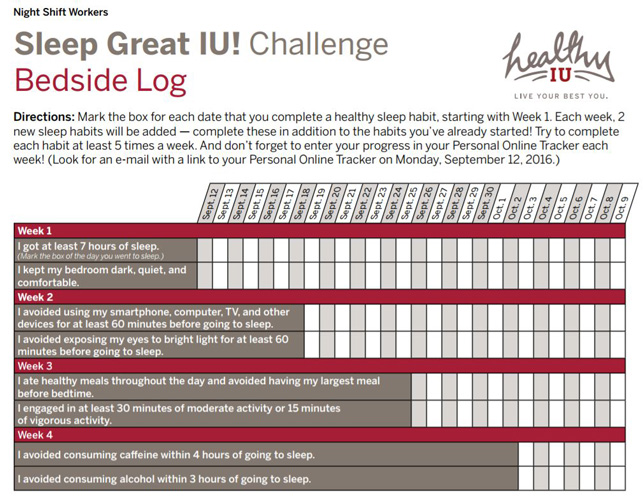
Participants were encouraged to practice eight habits promoting better sleep. Each week they had a different focus. For day-shift workers, week one covered sleep quantity and regularity; week two focused on bedtime routine; week three concentrated on daylight and physical activity; and week four addressed caffeine and alcohol. For night-shift workers weeks one and four were the same; but in week two, the emphasis was on light exposure and week three covered nutrition and physical activity.
According to Patty Hollingsworth, director of Healthy IU, lifestyle choices affect sleep. "There are a number of evidence-based practices that improve sleep. The IU sleep team narrowed the list to interventions that people are likely to try and that could have a high impact on the quantity and quality of sleep," she said in a prepared statement. "Giving individuals tools to try different sleep hygiene options and track their personal experiences is empowering. It allows people to figure out what works for them."
For example, one goal promoted in the program was getting at least seven hours of sleep. Other goals encouraged people to avoid using devices with electronic screens at least 60 minutes before going to sleep or to avoid consuming caffeine within six hours of bedtime.
Among those who followed through on participation, 58 percent reported increased energy levels and 52 percent reported an increase in their ability to manage stress.
Also, there was a reduction by one third of people sleeping fewer than seven hours, a 55 percent reduction in the number of people who were dissatisfied with their sleep pattern and a 40 percent reduction in the number of people who didn't get enough restful sleep to function well the rest of the day.
Healthy IU is continuing to support the challenge and has worked with the institution's Innovation and Commercialization Office to license the structure of the program to other organizations, including other schools.
"Insufficient sleep is a public health issue that needs the support of individuals, employers and communities to encourage improvement," noted Hollingsworth. "IU hopes to support this through the Sleep Great challenge and further research."
About the Author
Dian Schaffhauser is a former senior contributing editor for 1105 Media's education publications THE Journal, Campus Technology and Spaces4Learning.