Google I/O 2017: Standalone Google VR Headsets from HTC, Lenovo Coming Soon

One of the major drawbacks to using virtual reality (VR) headsets is being tethered to a smartphone or PC while immersed in an experience. However, yesterday at the annual Google I/O 2017 developer conference, Google unveiled an upcoming “revolutionary” standalone VR headset that aims to change that. The headset will be manufactured by HTC and Lenovo.
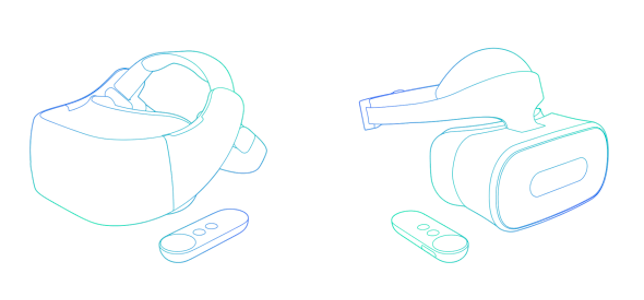
Prototypes of the upcoming Daydream-compatible headsets from HTC (left) and Lenovo (right). Images: Google.

The Daydream-compatible standalone headsets will utilize Qualcomm’s Snapdragon 835 VR platform and what Google is calling “WorldSense” technology, powered by its own Tango augmented reality system. On-board sensors in the headsets will enable inside-out tracking, which will remove the need to connect to any external hardware. Prices and release dates are to be determined.    

Read More

Clay Bavor, vice president of virtual and augmented reality at Google, wrote an essay on Medium that explains WorldSense in more detail.

The Daydream VR platform was introduced at last year’s I/O conference and already there are more than 150 VR apps in the Google Play Store. Google has been working on its standalone VR headset for more than a year.

To learn more about how WorldSense works, watch the video below.

About the Author

Sri Ravipati is Web producer for THE Journal and Campus Technology. She can be reached at [email protected].

Featured

  • A person types on a laptop surrounded by floating digital profiles

    CrowdStrike to Acquire Identity Security Firm SGNL

    AI-based cybersecurity firm CrowdStrike has signed a definitive agreement to acquire identity security company SGNL in a deal valued at approximately $740 million.

  • hand typing on laptop with security and email icons

    Copilot Gets Expanded Role in Office, Outlook, and Security

    Microsoft has doubled down on its Copilot strategy, announcing new agents and capabilities that bring deeper intelligence and automation to everyday workflows in Microsoft 365.

  • large group of college students sitting on an academic quad

    Student Readiness: Learning to Learn

    Melissa Loble, Instructure's chief academic officer, recommends a focus on 'readiness' as a broader concept as we try to understand how to build meaningful education experiences that can form a bridge from the university to the workplace. Here, we ask Loble what readiness is and how to offer students the ability to 'learn to learn'.

  • Abstract speed motion blur in vibrant colors

    3 Ed Tech Shifts that Will Define 2026

    The digital learning landscape is entering a new phase defined by rapid advances in artificial intelligence, rising expectations for the student experience, and increasing pressure to demonstrate quality and accountability in online education.