Online Mathematics Homework Program to Begin Research Studies
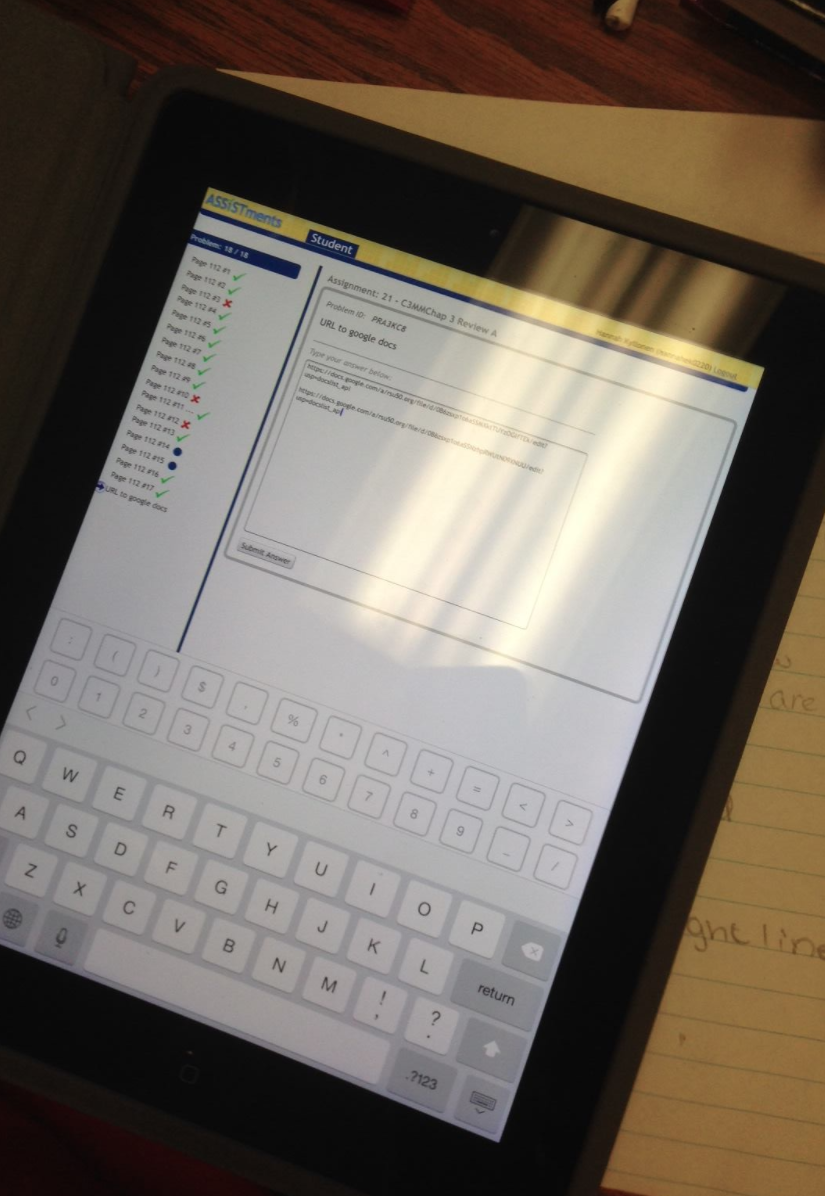
Image: ASSISTments.
A free, online math learning platform developed at Worcester Polytechnic Institute has received two separate grants totalling $7 million from the Institute for Educational Services (IES), part of the United States Department of Education (ED). The funding will be used to further test ASSISTments, which has shown can lead to significant gains on standardized math tests.
The tool was designed to provide homework help, offering immediate feedback on problem sets to encourage students not to repeat mistakes. It is also made to give teachers more insight into problem areas, sending them a report that shows what areas require extra practice.
Previously, a two-year study of ASSISTments conducted by SRI Education with a $3.5 million IES grant sought to evaluate the effectiveness of the tool for math homework. With assistance from the University of Maine, the study involved 2,850 students in grade 7 at 44 Maine public schools. Students using ASSISTments on iPads and laptops scored approximately 75 percent higher than students in the schools not using the program.
Now, a four-year grant for $3.3 million will go to Worcester Polytechnic Institute, SRI International and North Carolina State University to analyze math test scores with the tool among a more diverse population of students, according to a news release. The demographic sampling will include 200 teachers and 10,400 students in grade 7 throughout 66 North Carolina public middle or junior high schools.
Another five-year grant for $3.8 million will be allocated to the American Institute for Research to assess 15,000 students in grade 7 across seven sites that differ culturally, economically and geographically, the statement said.
About the Author
Sri Ravipati is Web producer for THE Journal and Campus Technology. She can be reached at [email protected].