OpenStax Making Diversity Updates
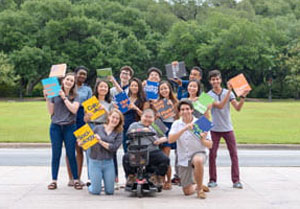
Photo: Jemel Agulto/OpenStax
OpenStax, Rice University's open educational resources initiative, is reviewing and updating images, examples and other materials in its textbooks to improve diversity and representation. The organization engaged its users as well as advocates for racial, ethnic, LGBTQ and gender equity to guide its diversity efforts.
"The updates OpenStax is currently making won't just impact existing titles; these considerations are being made and steps are being taken to ensure that future textbook content accurately represents historical accounts, society and more,"explained OpenStax Managing Director Daniel Williamson, in a statement.
The improvements will cut across subject areas, including everything business, science and mathematics to the humanities. "Our Sociology textbook, for example, which deals closely with issues of race, gender and inequality, will have new topics added and existing topics revised,"noted OpenStax Editorial Director Anthony Palmiotto. "Meanwhile, we are in the process of developing an entirely new English Composition textbook that invites students to participate in the ongoing dialogue over the power of language to shape identity and culture. To bring forth diverse experiences and amplify unique voices, the book will feature a powerful group of trailblazers from a variety of backgrounds, including Frederick Douglass, Alice Wong and Tara Westover. Our other textbooks — both previously published and in development — are undergoing similar changes to reflect the lived experiences of our users and the inclusive approaches of each discipline."
The new content will begin with the publication of the Sociology 3e and updated Biology 2e textbooks in May. Users can provide feedback on any textbook via its errata submission tool.
About the Author
Rhea Kelly is editor in chief for Campus Technology, THE Journal, and Spaces4Learning. She can be reached at [email protected].