Blackboard Brings Web Conferencing App to Android
Blackboard has updated its online collaboration and Web conferencing system, Blackboard Collaborate, and launched a version for Android.
Blackboard Collaborate is an online platform designed specifically for education that offers Web conferencing, virtual whiteboarding, instant messaging, message boards, podcasting, and other collaborative tools. It also offers an integrated gradebook and integration with learning management systems, including Blackboard Learn.
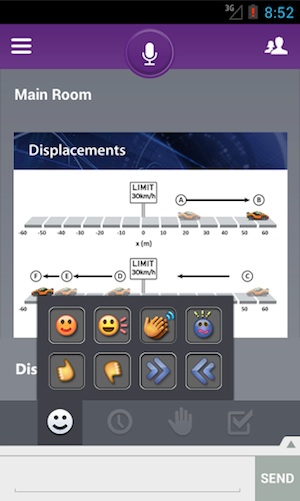
Blackboard Collaborate Mobile on Android |
The new mobile version of Collaborate for Android allows users to participate in Collaborate conferences. Participants can chat, use two-way audio, use emoticons, answer survey questions, raise their hands, join breakout rooms, and view presentations, including annotations, images, shared applications, and shared desktops.
In addition to the mobile version, Blackboard is also launching some significant enhancements to the core product this week, including functionality that allows participants to record sessions "and make them viewable on any mobile device, through learning management systems (LMS), iTunes U, or Web portals as MP3 or MP4 files," according to Blackboard.
Other enhancements include:
- Automatic assignment of a conference call number during scheduling (as an alternative to using the program's built-in vice capabilities);
- Support for JAWS 13 and 14 with Java Access Bridge 2.0.3;
- Ability for moderators to enable or disable emoticons for all participants; and
- Simplified tools that allow moderators to change participants' permissions.
Version 12.5 also includes various bug fixes and enhancements, such as an autoscrolling glitch, improper display of quizzes in multi-byte languages, and others.
Blackboard Collaborate Mobile is available now as a free download from the Play Store. (It must be enabled by an institution with a hosted enterprise license of Collaborate version 12 or later.) The updated version of Collaborate is available this week in North America, according to Blackboard, and will be available internationally "later this year." Additional details can be found on Blackboard's site.