Social Media App Uses Augmented Reality to Connect College Students
The TeePeedU app uses AR technology to help students build real life connections across their campus.
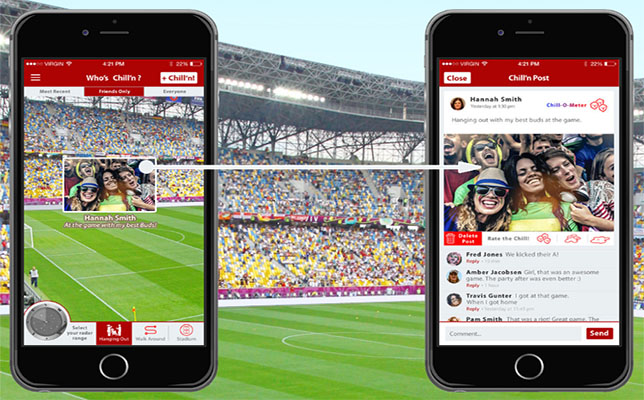
Image Source: TeePeedU.
College students will soon be able to interact virtually in class and at sports games, with help from a new augmented reality app. TeePeedU is a free college social media app that aims to get students out of the dorm and connect with each other in real life.
The name refers to the act of teepeeing, or stringing toilet paper trails around objects. TeePeedU allows students to teepee each other virtually by “dropping digital graffiti all over campus with everyone you want to know and hang out with,” according to the company. Users can leave photos of themselves around campus, which others can see through the app’s AR ecosystem.
The key features of the app include:
- “SpotSelfie,” a way for users to secure a spot on campus that hosts their photos, videos and more;
- “Me-Code,” a visual biography that describes “everything from your personality to body type to emotional baggage” in the form of a color-coded grid;
- “Chill’n Post,” a feature that allows users to overlay a picture where it happened in the real world, and other users can stop by to comment and rate the “chill factor” of the photo;
- “Flash Antics,” a feature that issues challenges (such as group dance moves) to nearby users in a short amount of time; and
- “TP Map,” a way to see everyone’s “digital toilet paper” left throughout the campus and to leave comments.
In addition to connecting students, TeePeedU boasts of opportunities for sponsors to market their campaigns through the app. The app allows logos and products to be suspended in the AR world, from 6-foot-tall beverages to full-size race cars.
The app will be available in the Apple App Store and the Android App Store on Sept. 16. Students can pre-register for the free app on the TeePeedU site.
About the Author
Sri Ravipati is Web producer for THE Journal and Campus Technology. She can be reached at [email protected].