CMU Researchers Roll Out Machine Learning App to Manage App Privacy Settings
A team of Carnegie Mellon University (CMU) researchers launched a mobile app that helps Android users configure many privacy settings necessary to take control of their personal data. The project expands the frontiers of the university’s “IoT expedition,” a collaboration with Google and several other higher ed institutions that aims to create new technology for the Internet of Things.
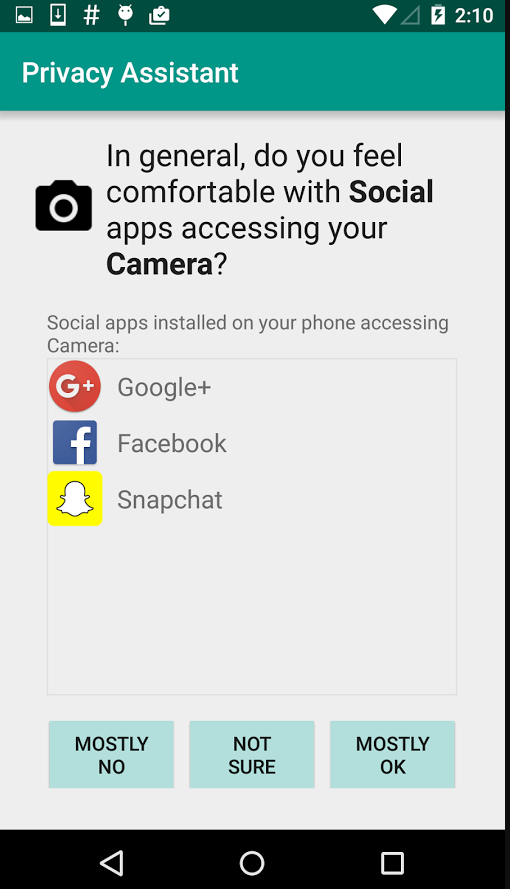
Privacy Assistant helps users personalize their app privacy permissions settings.
CMU’s Personalized Privacy Assistant Project designed Privacy Assistant, which utilizes machine learning to take control of the information that apps on Android devices routinely collect. It works by asking users a few simple questions about their privacy preferences and then recommends specific permissions settings to best meet those needs. The app is available on the Google Play Store. (It’s only available for use on rooted mobile devices running Android 5.X; Android 6 and 7 users must have “signature verification” disabled to use the app.)
Most people prefer to use recommendations from privacy assistants to manage their mobile app permissions settings, a study found. The Personalized Privacy Assistant Project is building an infrastructure that will enable resource owners to not only present their resources, but share their associated privacy practices. Along with this technology, the researchers are developing privacy assistants that are user-friendly and utilize machine learning techniques.
“We envision personalized privacy assistants as intelligent agents capable of learning the privacy preferences of their users over time, semi-automatically configuring many settings, and making many privacy decisions on their behalf. Through targeted interactions, privacy assistants will help their users better appreciate the ramifications associated with the processing of their data, and empower them to control such processing in an intuitive and effective manner,” the project website explains. For example, researchers are currently exploring the idea of adding “nudges” to the app, or notifications that will inform users of data they are sharing.
To learn more about the Personalized Privacy Assistant Project, watch the video below or visit the CMU site.
About the Author
Sri Ravipati is Web producer for THE Journal and Campus Technology. She can be reached at [email protected].