ASUS Intros New Convertible Laptops for Education
- By Kate Lucariello
- 04/05/23
ASUS has introduced two new education laptop series: the BR1402 2-in-1 convertible laptops (the first of their kind at 14 inches), and the CR1102 (11-inch) Chromebooks, both in clamshell and flip versions. ASUS also has released a desktop tower. These new devices are designed to make hybrid learning and collaboration easier in today’s education environment, the company said in a release.
According to ASUS, both series’ laptops feature:
-
Wraparound, reinforced rubber bumpers and grips;
-
Water-resistant keyboards;
-
MIL-STD-810H military-grade standards;
-
Modular designs for easy, quick repair or replacement of keyboards, batteries, panels, and mainboards;
-
180-degree lay-flat hinges (CR1102c or BR1402c) or 360-degree flip hinges (CR1102f or BR1402f);
-
Keyboards treated with ASUS Antimicrobial Guard;
-
TÜV-certified displays;
-
Webcam privacy shields;
-
2-in-1 convertible design, garaged stylus3 and long-lasting battery life of up to 12 hours (flip versions).
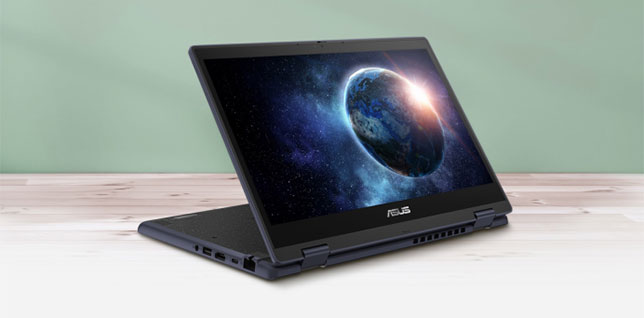
The BR1402 series offers:
-
A 14-inch touchscreen;
-
A 13-megapixel world-facing camera;
-
Up to 16 GB DDR4 RAM;
-
1 TB SSD;
-
AI-powered noise canceling technology;
-
Hardware-level protection against sophisticated cyberattacks with Trusted Platform Module 2.0 (TPM 2.0).
The ExpertCenter D7 Tower features:
-
Up to 13th gen Intel® Core™ i9 processors;
-
128 GB of RAM;
-
Modular design and full I/O ports;
-
Quick-release internal components and tool-free chassis;
-
Upgraded security with enterprise-ready TPM 2.0 support to securely store key authentication information.
For more information on each of these devices, visit the following pages: BR1402c, BR1402f, CR1102c, CR1102f, and ExpertCenter D7 Tower.
About the Author
Kate Lucariello is a former newspaper editor, EAST Lab high school teacher and college English teacher.